CLC Asia Analysis: Will new ‘Smart Visa’s’ be a game changer for Thailand’s tech start ups?
News and Opinions
08 Feb 2018


Source: CLC asia
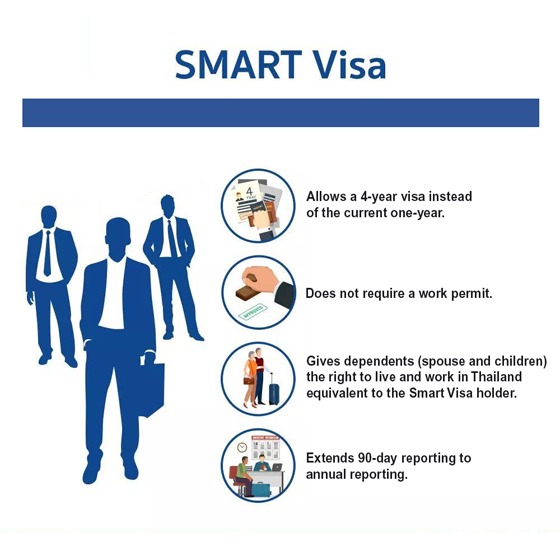
The Thai government officially launched its new ‘Smart Visa’ programme at the start of this month. The launch had been anticipated with some excitement in the later stages of 2017, as the government announced their intention to make it easier to attract workers and investment into the rapidly expanding digital economy sector. Further details about the visa are outlined on the Board of Investments website here. Our initial thoughts on the new scheme are outlined in the next section. Korbsak Pootrakool, Minister attached to the Prime Minister’s office[/caption]
[caption id="attachment_876" align="alignright" width="420"]
Korbsak Pootrakool, Minister attached to the Prime Minister’s office[/caption]
[caption id="attachment_876" align="alignright" width="420"] Duangchai Atsawachintachit, the Director General of the Board of Investment.[/caption]
Given this is a new approach for the Thai government, it is still too early to assess how the actual implementation of the visa will work. However, based on the briefing, we have come to some preliminary conclusions on what this visa may mean for investors and professionals interested in the programme.
Duangchai Atsawachintachit, the Director General of the Board of Investment.[/caption]
Given this is a new approach for the Thai government, it is still too early to assess how the actual implementation of the visa will work. However, based on the briefing, we have come to some preliminary conclusions on what this visa may mean for investors and professionals interested in the programme.
The Thai government officially launched its new ‘Smart Visa’ programme at the start of this month. The launch had been anticipated with some excitement in the later stages of 2017, as the government announced their intention to make it easier to attract workers and investment into the rapidly expanding digital economy sector. Further details about the visa are outlined on the Board of Investments website here. Our initial thoughts on the new scheme are outlined in the next section.
CLC Asia Analysis
The Thai government spent much of 2017 consulting industry representatives on how better to attract investment into the digital economy sector. The focus of these discussions was how to facilitate easier access to the sector by foreign workers as well as investment, both in established businesses, but also critically, start-ups. During the consultations, which CLC Asia was part of, industry representatives made clear Thailand’s digital economy sector was growing rapidly, but risked falling behind competitors both in the region and globally due to outdated laws and some non-cooperative government agencies. One of the major hurdles identified was Thailand’s antiquated work permit system which saw many workers simply fly under the radar, working illegally, rather than grapple with a system which often presented no formal way for them to legalize their status in Thailand. Restrictive ownership laws too, made it difficult for foreign investors to invest in nascent Thai start-ups and SME’s. As a result of this feedback, the government announced in January 2018 the broad framework of the programme, which will target foreign experts, executives, entrepreneurs and investors to work or invest in the governments nominated ten ‘S-Curve” industries. These are:- Next-Generation Automotive
- Smart Electronics
- Affluent, Medical and Wellness Tourism
- Agriculture and Biotechnology
- Food for the Future
- Automation and Robotics
- Aviation and Logistics
- Biofuels and Biochemicals
- Digital
- Medical Hub
Korbsak Pootrakool, Minister attached to the Prime Minister’s office[/caption]
[caption id="attachment_876" align="alignright" width="420"] Duangchai Atsawachintachit, the Director General of the Board of Investment.[/caption]
Given this is a new approach for the Thai government, it is still too early to assess how the actual implementation of the visa will work. However, based on the briefing, we have come to some preliminary conclusions on what this visa may mean for investors and professionals interested in the programme.